Source Rechargeable Hands Free Neck Magnifier for Jewelry, Electronics, and Reading
Compare 30 available options for the Rechargeable Hands Free Neck Magnifier designed for precision work. Buyers can evaluate models with varying magnification levels, battery types, and customization support from Chinese manufacturers.
Key considerations
Products List


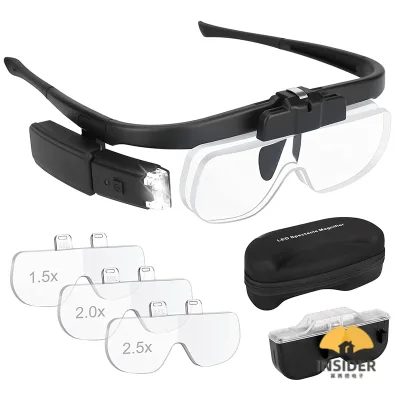
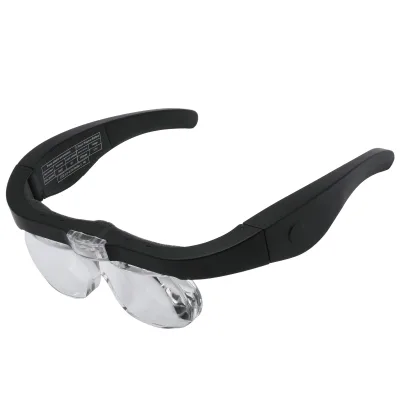
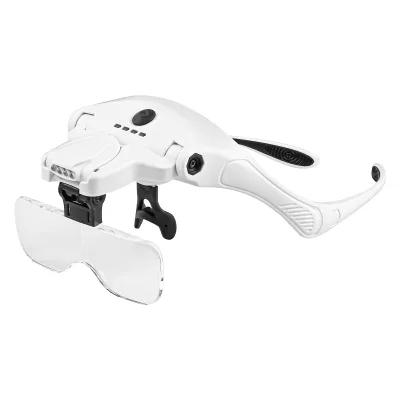
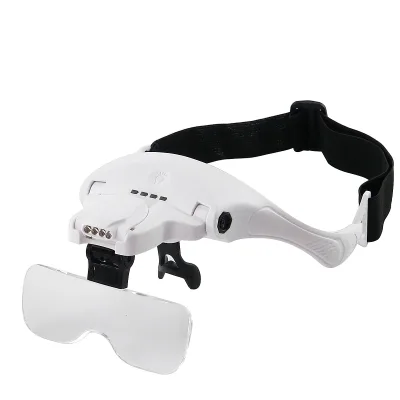
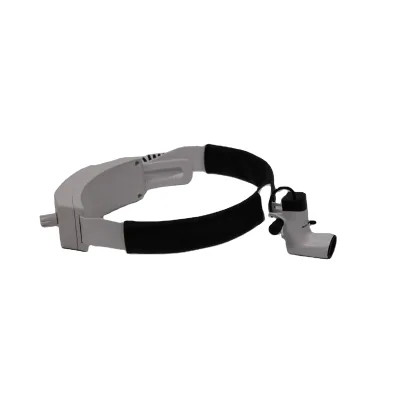
Professional Head Magnifier Headband Visor Lens Angle Adjustable (BM-MG5001)
$3.50 - $4.00
MOQ: 24 Pieces


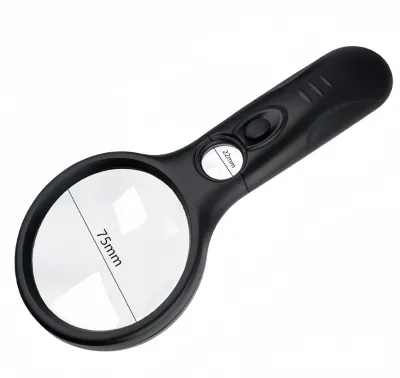

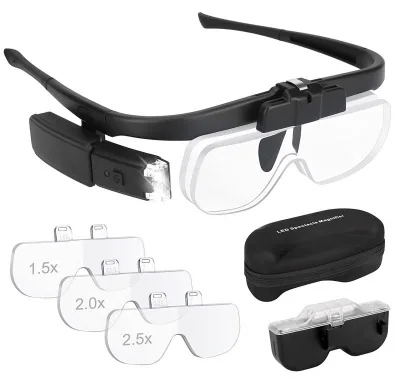


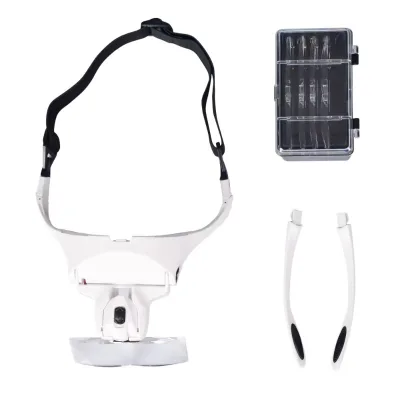
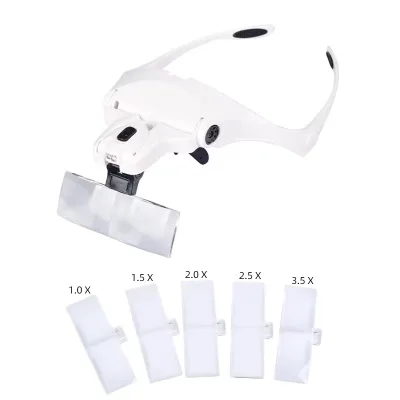




Comprehensive Sourcing Guide
Strategic Sourcing Guide for Rechargeable Hands-Free Neck Magnifiers
The global demand for precision optical tools has driven a significant shift toward hands-free solutions, particularly in sectors requiring sustained visual inspection without manual stabilization. The core keyword "rechargeable hands-free neck magnifier" identifies a specific category of portable magnification devices designed to be worn around the neck, freeing the user's hands for intricate tasks. For B2B procurement professionals, navigating this market requires a disciplined approach to verifying technical specifications, understanding cost structures, and ensuring supplier reliability. This guide synthesizes available product data and industry standards to provide a comprehensive framework for sourcing these specialized optical instruments.
Technical Architecture and Optical Specifications
When evaluating a rechargeable hands-free neck magnifier, the primary technical differentiator lies in the optical system and the power management architecture. Unlike standard handheld magnifiers, these devices must balance magnification power with weight distribution to ensure user comfort during extended periods of wear. The product data indicates a diverse range of magnification standards, with specific models offering configurations such as 1.0X, 1.5X, 2.0X, 2.5X, 3.5X, and even up to 8X. Buyers must recognize that higher magnification ratios often correlate with a narrower field of view and a shorter working distance, which may require specific adjustments in the optical design to remain practical for hands-free use.
The illumination system is equally critical for functionality in low-light environments. The observed product attributes reveal a mix of light sources, ranging from LED configurations to bulb-based systems. Specific high-end models feature integrated LED arrays, such as those with "3 Leds" configurations, which provide uniform lighting to reduce shadows during detailed work. The power source is a defining characteristic of the "rechargeable" aspect of the keyword. While some legacy or budget models rely on disposable batteries like 3x AAA or 3lr1130, the target category specifically demands built-in rechargeable lithium batteries. Data points confirm the existence of units equipped with "300mAh Rechargeable Lithium" batteries or generic "Rechargeable Lithium Battery" systems. Procurement teams must verify the battery capacity and charging cycle life, as these directly impact the device's utility in industrial or professional settings where access to power outlets may be intermittent.
Material Composition and Ergonomic Design
The physical construction of the magnifier dictates its durability and user acceptance. The supplied facts highlight "Plastic" as a primary material for the housing and handle components. While plastic offers weight advantages essential for neck-worn devices, the specific type of plastic and its finish determine the product's resistance to wear and tear. Some models feature a "Plastic Cement" handle, suggesting specific assembly techniques that may affect the structural integrity of the grip. The shape of the device varies significantly, with observations noting both "Circular" and "Rectangle" forms. The rectangular design is often preferred for mounting optical lenses in a wider format, while circular shapes may offer a more traditional aesthetic.
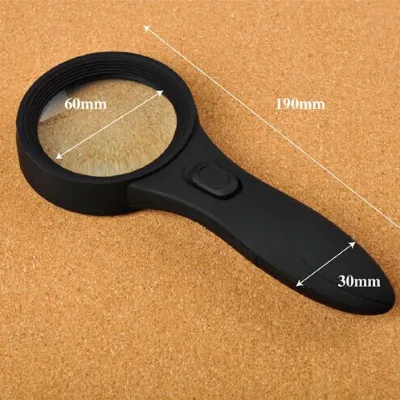
Ergonomics are paramount for a "hands-free" device. The structure is described as "Portable," and specific configurations include "Handle Type" and "Folding Type" magnifiers. The folding mechanism is a crucial feature for storage and transport, allowing the device to be compacted when not in use. The mirror surface is noted as "Convex," which is a standard optical property for magnifying lenses, but the specific curvature must be verified against the claimed magnification power. Furthermore, the product origin is consistently listed as "China," indicating a concentrated manufacturing hub. Buyers should be aware that while this offers cost efficiencies, it necessitates rigorous quality control to ensure that the plastic molding and lens alignment meet international tolerance standards.
Cost Drivers and Pricing Dynamics
The pricing landscape for rechargeable neck magnifiers is highly variable, reflecting the complexity of the optical and electronic components. The observed listed price range spans from $0.8 to $569 USD. This wide disparity suggests that the market includes both basic, non-rechargeable entry-level models and sophisticated, high-magnification units with advanced lighting and battery systems. The lower end of the spectrum likely corresponds to simple magnifiers with basic LED lights and disposable battery requirements, whereas the upper end encompasses premium models with high-capacity rechargeable batteries, superior lens quality, and ergonomic designs.
Several factors drive these costs. First, the inclusion of a rechargeable lithium battery system adds significant material and assembly costs compared to models using standard AAA batteries. Second, the number and quality of LEDs, such as the "3 Leds" configuration, influence the price. Third, the magnification range and lens quality are primary cost drivers; a device offering up to 8X magnification with a clear field of view commands a higher price than a 1.5X unit. Additionally, customization options, such as OEM support and specific color schemes like "Black&Red" or "Black," can increase the unit cost. Buyers must align their budget with the specific performance requirements of their application, avoiding the pitfall of over-specifying for simple tasks or under-specifying for critical inspection work.
Compliance, Certification, and Regulatory Checks
In the B2B sector, compliance is not merely a formality but a prerequisite for market access and liability protection. While the supplied product facts do not explicitly list specific certification bodies (such as CE, FCC, or RoHS), buyers must treat these as mandatory verification points. Any device containing a lithium battery must comply with international shipping regulations regarding hazardous materials, particularly for air transport. The presence of electrical components, including rechargeable batteries and LED drivers, necessitates electrical safety certifications to prevent fire hazards or electrical shocks.
Buyers should request proof of compliance for the specific model numbers identified, such as "BM-MG5013" or "AMS-NO. 9892BC." The standard packing configuration, noted as "24 pcs/ctn" or "240 pcs/ctn," must also align with export regulations regarding packaging materials. Furthermore, if the product is marketed as a "Gift" or "Stationery Kit," it may need to meet specific toy safety standards depending on the target demographic and region. The "Customized" attribute implies that OEM and ODM services are available, which often involves customizing packaging or branding. In such cases, the supplier must ensure that the customizations do not void existing certifications or introduce new regulatory requirements.
Supplier Evaluation and Production Capabilities
Selecting the right supplier for rechargeable neck magnifiers requires a deep dive into their manufacturing capabilities and flexibility. The data indicates that "Customization" is available, with specific mentions of "OEM, ODM" support. This suggests that suppliers are capable of modifying product designs, colors, and packaging to meet buyer specifications. The minimum order quantity (MOQ) varies, with observed ranges from 1 to 2000 units. A specific data point notes an MOQ of "5pcs," which is highly favorable for small-scale testing or prototype orders, while other models may require bulk purchases.
When evaluating suppliers, buyers should verify the consistency of their production standards. The product origin is listed as "China," a region known for high-volume manufacturing. However, the ability to maintain quality across different model numbers, such as the "BM-MG" series versus the "AMS" series, is a key indicator of supplier maturity. Buyers should assess the supplier's capacity to handle the "24 pcs/ctn" or "240 pcs/ctn" packing standards efficiently. Additionally, the "Color Box" packaging requirement implies a need for branding capabilities. A robust supplier will provide samples that match the described specifications, including the correct battery type, lens magnification, and light source configuration, before committing to a large order.
Quality Control and Long-Term Procurement Strategy
Quality control in the optical and electronics sector is critical to prevent product failures that could lead to safety incidents or reputational damage. Given the "Portable" and "Neck" nature of the device, mechanical stress testing is essential to ensure that the folding mechanism and neck strap do not fail during use. The "Rechargeable Lithium Battery" must undergo rigorous cycle testing to ensure it retains capacity over time. Buyers should implement a quality control protocol that includes visual inspection of the lens for scratches or defects, testing of the LED brightness and uniformity, and verification of the battery charging cycle.
For long-term procurement, establishing a clear communication channel with the supplier regarding the "prod_model" and "prod_standard" is vital. The existence of multiple models with different specifications, such as the "1.0X" to "8X" range, requires precise documentation to avoid mix-ups in orders. Buyers should also consider the lifecycle of the product, including the availability of replacement parts like batteries or lenses. The "Suitable for: Universal" attribute suggests broad applicability, but buyers must ensure the device meets the specific needs of their end-users, whether in industrial, medical, or educational settings. By maintaining a disciplined approach to specification verification and supplier performance monitoring, organizations can secure a reliable supply chain for these essential optical tools.
Application Scenarios and Market Fit
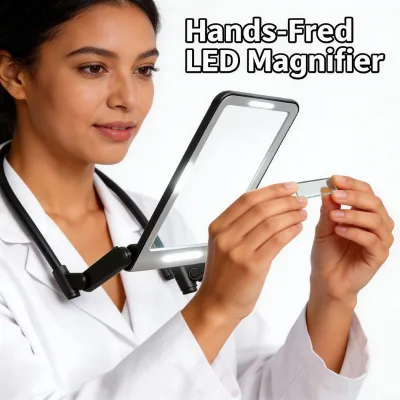
The versatility of rechargeable hands-free neck magnifiers makes them suitable for a wide array of applications. The "Usage" attribute lists "Gift" and "Stationery Kit," indicating a consumer market, but the technical specifications suggest strong potential in professional sectors. In industrial settings, workers performing soldering, watchmaking, or electronics assembly benefit from the hands-free design, which improves precision and reduces fatigue. The "3 Leds" lighting system is particularly valuable in environments where ambient light is insufficient.
For the medical and dental fields, the high magnification options (up to 8X) allow for detailed examination of small components or procedures. The "Folding Type" design is advantageous for professionals who need to carry the device in a kit or pocket. The "Creative" style and "Color" options like "Black&Red" allow for branding opportunities, making these devices ideal for corporate gifts or promotional items. However, buyers must ensure that the "Portable Magnifier" design does not compromise the stability required for critical tasks. By matching the specific model specifications to the intended application, procurement teams can maximize the value and utility of their investment in these optical tools.
FAQs
What battery types are used in these magnifiers?
Models use either rechargeable lithium batteries or disposable options like 3x AAA. Specific units feature 300mAh rechargeable lithium cells, while others require 3lr1130 or standard AAA batteries not included in the package.
Which magnification powers are available for purchase?
Available magnification standards range from 1.0X up to 8X depending on the model. Specific configurations include 1.5X, 2.0X, 2.5X, 3.5X, and 5.0X options found in various product series like AMS-NO. 9892BC.
Can suppliers support custom branding and designs?
Yes, OEM and ODM customization support is available for these products. Buyers can request custom colors like Black or Black&Red, and suppliers offer creative styles suitable for gifts or stationery kits.
How many units are typically packed in one carton?
Packing standards vary by model, with common configurations being 24 pieces per carton or 240 pieces per carton. The specific packing quantity depends on the product model and its designated shipping standard.
What is the minimum order quantity for these items?
The minimum order quantity ranges from 5 pieces to 2000 units depending on the supplier and model. Some specific listings indicate a low entry point of 5 pieces for testing or small orders.
Are LED lights included in the illumination system?
Many models feature integrated LED light sources, with some high-end units equipped with 3 LEDs. However, certain basic models may not include lights or rely on bulb-based systems instead of LEDs.